Strategic AI adoption · Professional Services

AI for fiduciary, tax and legal advisors: more time for clients

Advisory firms live on knowledge, trust and the time of their experts. AI can take over routine and strengthen quality, provided confidentiality, professional secrecy and liability are built in from the start.

  • Confidentialityprofessional secrecy preserved
  • Client timeinstead of routine
  • Defensiblea file for clients, insurers and supervisors
  • Pragmaticfor law, fiduciary and asset management firms
For your daily work

Value in client work, not in the tool

We focus on time per mandate, lead time for closings and tax returns, research time, error rate and the capacity of your experts.

Capturing receipts, reviewing documents, summarising research, preparing drafts: much of it can be accelerated with AI. What matters is that judgement and responsibility stay with your experts.

AI works where experts lose time to routine

FiduciaryTax advisoryLegal advisoryClient communication

AI opportunity map

Six areas where AI makes the difference

Each opportunity is paired with the KPIs that show whether the AI work paid off.

AreaAI opportunityValue metric
Accounting and closingReceipt capture, booking suggestions, plausibility checks, closing preparationTime per mandate, error rate, closing lead time
TaxTax return preparation, document review, research on practice and case lawReturn lead time, queries, research time
LegalContract analysis, clause comparison, drafting, file summariesReview time per document, capacity, draft quality
Client communicationCorrespondence drafts, summaries, client FAQResponse time, client satisfaction, effort per request
Knowledge managementInternal knowledge assistant on approved sources, templates, practice notesSearch time, reuse, onboarding time
Firm managementTime recording, utilisation, proposal preparationBillability, utilisation, proposal lead time
Our approach

Five levels, from a secure foundation to new services

Our approach follows our methodology: each level builds on the previous one and is a separate decision, taken on the basis of what we have measured. For most firms it starts with level 1, a secure foundation for the AI use that is often already happening.

AI check · 5 minutes · free

Where does your firm stand on AI?

For law, fiduciary, asset management and advisory firms: can you defend today's use of AI, where is time lost, and what would pay off? The result appears right away, with a personal start plan by email if you wish.

Start the AI check →
  1. Level 1The entry point

    Secure foundation

    A firm-owned workspace, contracts, a written rule and your way of working, set up in six weeks.

    ValueUncontrolled use becomes a practice you can defend.

    Level 1 in detail ↓
  2. Level 2

    Your own workspace

    Processing in Europe, retention you set, a complete record per matter, your templates and deadline calculation.

    ValueThe remaining compliance gaps close, and matter work gets measurably faster.

  3. Level 3

    Email and tasks

    Incoming mail matched to the right matter and summarised, deadlines and tasks proposed, replies drafted. You approve everything.

    ValueThe inbox stops setting your agenda, and nothing quietly slips.

  4. Level 4

    Repeatable matters

    Your standard processes written down once as approved playbooks, with calculations and approval points built in.

    ValueRoutine matters take a fraction of the time, and fixed fees become viable.

  5. Level 5

    Digital services

    Standardised services offered online, with your review at the end.

    ValueRevenue that is no longer bound to the hours you personally work.

For your profession

The approach is the same for everyone. What differs are the professional rules, the typical tasks and the services that become possible later.

Law firms

Rules
Legal professional secrecy: entrusting client data to an external service requires contracts, rules and control that preserve professional secrecy.
Typical tasks
Correspondence, contract review, deadlines, file summaries
Possible later
Standardised reviews, for example of employment references or contract clauses

Fiduciary and tax advisory

Rules
Confidentiality and data protection: clear contracts with providers and a written rule on what may be processed.
Typical tasks
Correspondence, closing documents, tax returns, receipt checks
Possible later
Standardised advisory and closing packages

Independent asset managers

Rules
Supervision and client confidentiality: FINMA expects governance, an inventory and monitoring of AI applications.
Typical tasks
Client reporting, documentation, onboarding, client correspondence
Possible later
Automated, personalised client reporting
Level 1 in detail

From uncontrolled AI use to a foundation you can defend

Many law and fiduciary firms already use AI, mostly through personal subscriptions. That is understandable, but hard to defend once a client, an insurer or a supervisor asks. Level 1 closes this gap, without changing how you work day to day.

  • 6 weeksto a documented foundation
  • ~8 hoursof your time
  • No changeWord, Outlook and filing stay

What actually changes

Today, oftenAfter the set-up
AccountsPersonal subscriptions on consumer termsA firm-owned workspace on commercial terms
Client materialDepending on provider and settings, used to train modelsExcluded from model training by contract
ContractsNo agreement governs the processingProcessing agreement and confidentiality undertaking
ClientsNot informed, nothing in the engagement termsInformation sheet and engagement clause, with a path for those who decline
The ruleJudgement in the moment, case by caseOne written rule on what may be processed and what may not
DocumentsCopied in and out by handConnected directly, with deliberately limited reach
DraftsGeneric wording, reworked every timeYour structure, your wording, your terminology
EvidenceNothing you could show if askedA file for clients, insurers or the supervisor

The six weeks at a glance

  1. Weeks 1–2

    Foundations

    • Firm workspace created, personal accounts retired
    • Microsoft 365 connected, reach deliberately limited
    • A separate space for each active matter

    Your part: One 90-minute session on your recurring tasks, and three decisions.

  2. Weeks 3–4

    The compliance file

    • Agreements and confidentiality undertaking
    • Assessment of possible foreign authority access documented
    • Client information, internal directive and written rule

    Your part: Around three hours to review and sign off.

  3. Weeks 5–6

    Your way of working

    • Your drafting style captured from past letters
    • Instructions for your recurring tasks
    • Baseline measurement started, so the gain is known

    Your part: Two short training sessions, then ordinary use.

Three decisions that are yours

Processing location

Whether processing outside Switzerland is acceptable for now, or whether level 2 is needed first.

Who gets access

Which staff use the environment, and how far their access into your files reaches.

What stays out

Whether specific clients, matters or types of work are excluded from AI use entirely.

What we deliberately do not do: No new filing system · No reorganisation of your folders · No new software to learn · No change to your existing IT and licences

The first step

A short 15-minute call. If the approach fits, we agree a 90-minute session to establish what your recurring tasks cost today and to define the set-up. Everything after that is decided on what we measure.
Larger advisory firms

From around 50 employees: the path of our standard methodology

With size, the questions change: several units, an IT department of their own, a portfolio of initiatives rather than a single foundation. Then the approach follows our playbook "Growth through AI" and Polaris: a shared view in management and board, goals and a 90-day plan, then pilots and scaling.

Reference: The Adecco Group, LHH

For LHH, the career and transition advisory of the Adecco Group, an AI product for people in career transition was built together with Microsoft. It helps them discover suitable new roles, assess their skills and take the next step with confidence. The path led from a clearly defined problem through a proof of concept on Azure OpenAI to the market launch in the US.

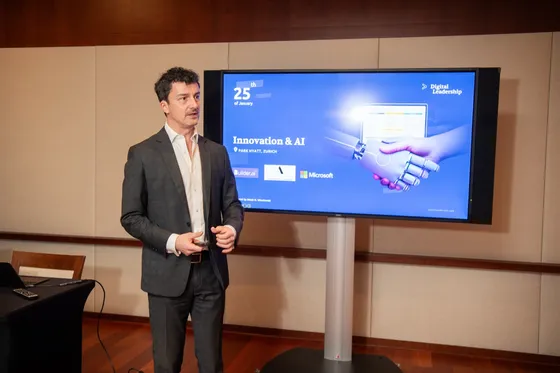
Adam D. Wisniewski supported the project as strategic advisor, from concept through architecture to presenting and promoting the result. It was presented in January 2024 together with the Adecco Group and Microsoft at the "Innovation & AI" event in Zurich, which he organised.

What the project shows

  1. Start with a clear business problem, not with technology.
  2. Build a proof of concept with a strong partner and upskill your own teams along the way.
  3. Move from a working prototype to a product users enjoy.
  4. Acceptance comes with people: used alone, the tool was hardly adopted. In a session guided by an advisor, acceptance was high.
  5. Build business support and excitement for the launch.
The key insight for advisory firms

AI works best where it strengthens personal advice rather than replacing it. Especially in difficult situations, feeling well looked after is what counts.

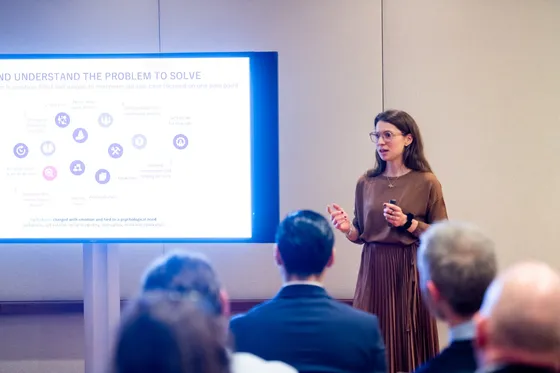
Adam D. Wisniewski opening the "Innovation & AI" event in ZurichThe Adecco Group presenting the project at the "Innovation & AI" event
"Innovation & AI", Park Hyatt Zurich, January 2024

See the Team BriefingSee the path for professional servicesAll projects

Avoid these traps

Three common pitfalls

01

Public AI tools with client data

The fastest route to a confidentiality problem. Clear rules, suitable environments and training come before broad use.

02

Automating without quality review

AI drafts are drafts. Without defined review steps and ownership, liability risk rises instead of efficiency.

03

Individual tools instead of a clear plan

Every team tests something different and nobody measures impact. A shared focus on two or three workflows achieves more.

Strengthen your experts

AI supports the judgement of your experts

Fiduciaries, tax experts and lawyers know the exceptions where routine ends. We involve them from the start and design workflows in which AI prepares and people decide.

Swiss standard

Strategic clarity, not AI hype

Our Zurich approach is rooted in Swiss pragmatism: clear decision points, measurable KPI impact, awareness of data sovereignty and governance under FADP and GDPR from day one. We do not measure your readiness; we show which AI work is worth doing.

Polaris by AI4Leaders

From AI North Star to pilots and scale, at your pace

For law, fiduciary and asset management firms: once the secure foundation is in place, Polaris helps you decide which use cases and new services are worth it for your firm, and prepare the pilots.

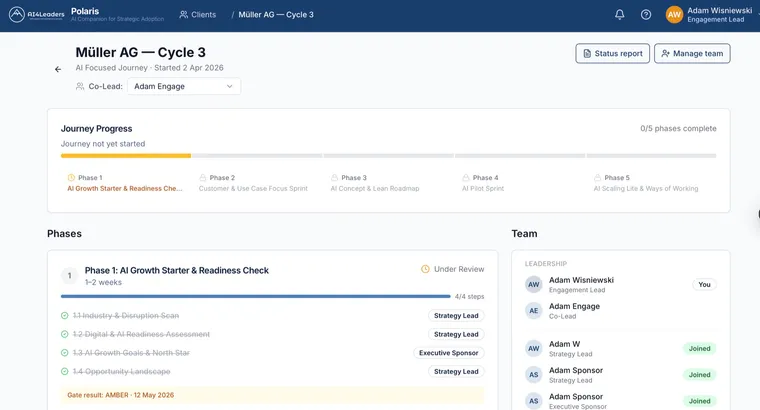
Polaris is our digital AI adoption companion for executive teams. AI prepares and reviews every task, your team decides, and our partners join where strategic clarity matters most.

  1. 1WhyStrategic orientation
  2. 2WhatAI potential and landscape
  3. 3DecidePrioritise use cases
  4. 4ActPilot preparation
  5. 5ScaleScaling and governance
  • 5 to 8 weeksuntil North Star, opportunities and pilot candidates are set
  • Partner momentssenior partners at the decisive points
  • Start nowno IT set-up needed
Cover: Growth through AIThe methodology behind PolarisGrowth through AIRead the key points →

Frequently asked questions

May we use AI with client data?

Yes, under the right conditions: suitable environments with data residency and contracts that respect professional secrecy and the FADP, clear internal rules and trained staff. We help define these guardrails.

Where should smaller fiduciary firms start?

With recurring, well-defined tasks such as receipt capture, plausibility checks or correspondence drafts. The benefit is quickly measurable there.

Does AI replace the experts?

No. AI prepares, your experts review and decide. The gain is more time for advice and less routine.

How much of our time does the set-up take?

Around eight hours over six weeks: a 90-minute session at the start, about three hours to review and sign off the compliance file, and two short training sessions. We do the rest.

Do we have to inform our clients?

Transparency is advisable and, depending on professional rules, required. We prepare an information sheet and an engagement clause, with a path for clients who decline AI support.

Ready to use AI sensibly in your firm?

Whether you start with the secure foundation, a conversation or directly with Polaris, the first step is a conversation that takes your firm, your professional rules and your clients seriously.

How would you like to talk to us?

How would you like to talk to us?

Which number can we reach you on?

When suits you?

Next, you pick your time at Microsoft Bookings and can briefly note your topic.

Prefer to write? Go to the contact form