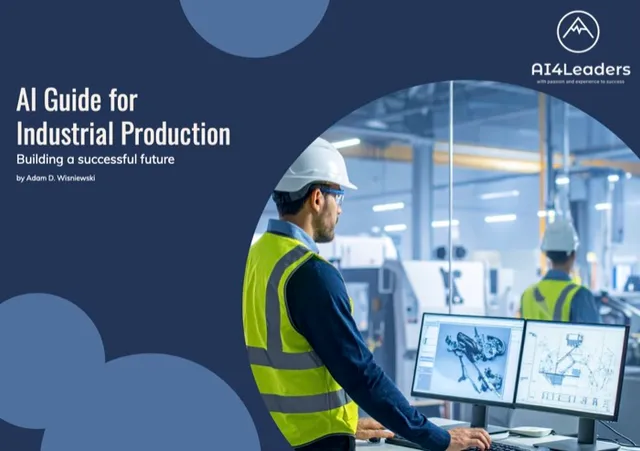
AI Guide for Industrial Production
AI can raise productivity in industrial production by 15 to 40 percent. The fastest route there usually does not lead through new machines, but through the data your production already generates and the specialists who work with the result.
 Adam D. Wisniewski
Managing Partner, AI4Leaders
Five insights from the guide
- 1
15 to 40 % productivity potential
Estimates range from 15 % with selective AI use to 40 % with comprehensive use, and they are rising.
Source: McKinsey, Sept. 2023; World Economic Forum, Sept. 2025
- 2
Your production data is an untapped treasure
Every process step generates data, but its value is rarely used. Specifically enriched, it enables continuous optimisation of the whole process, better forecasts and more precise price and delivery information for customers.
- 3
Adoption is the most common reason for failure
Experienced specialists must be involved from the start. In one project, an AI assistant learned from the best specialists and made that knowledge available to all: 20 % more productivity and more satisfied employees.
- 4
Big impact beyond production
In sales, marketing and service, AI works above all in customer interaction. AI agents take tedious steps off employees and deliver information exactly when it is needed.
- 5
For smaller operations: few but valuable applications
Typical are analysing production data to optimise processes and a modern customer channel, for example with automatic price and delivery estimates. A first AI roadmap belongs from the start.
- Executive teams of industrial SMEs
- Heads of production, engineering, quality and service
- Companies running ERP, MES or PLM
- AI: why now?
- Wait or act?
- Which AI for which purpose?
- Approaches for production (with use case overview)
- AI in support functions
- AI adoption maturity
- Prerequisites and security
- Implementation and specifics
- Terms and abbreviations
Two pages from the guide
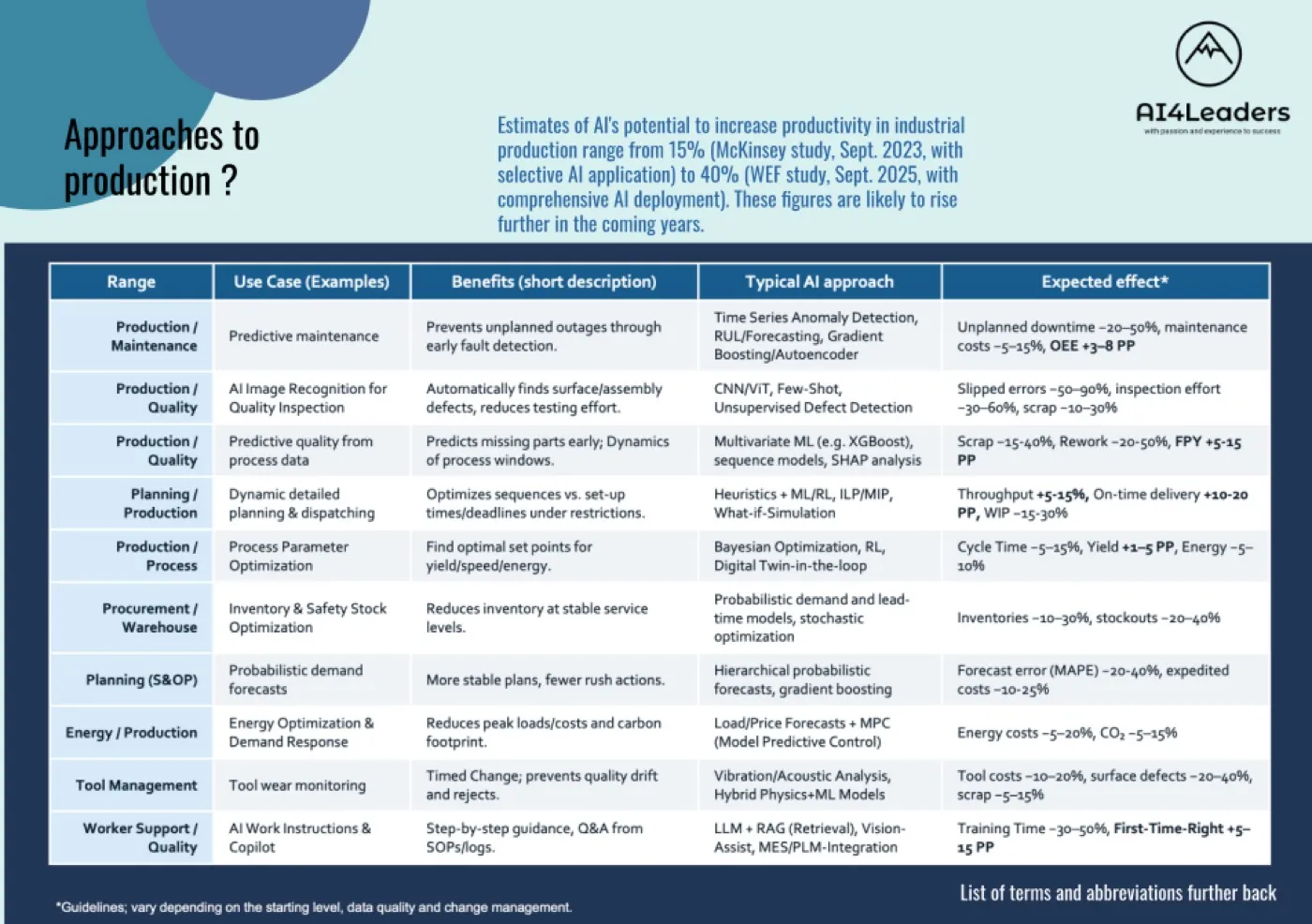
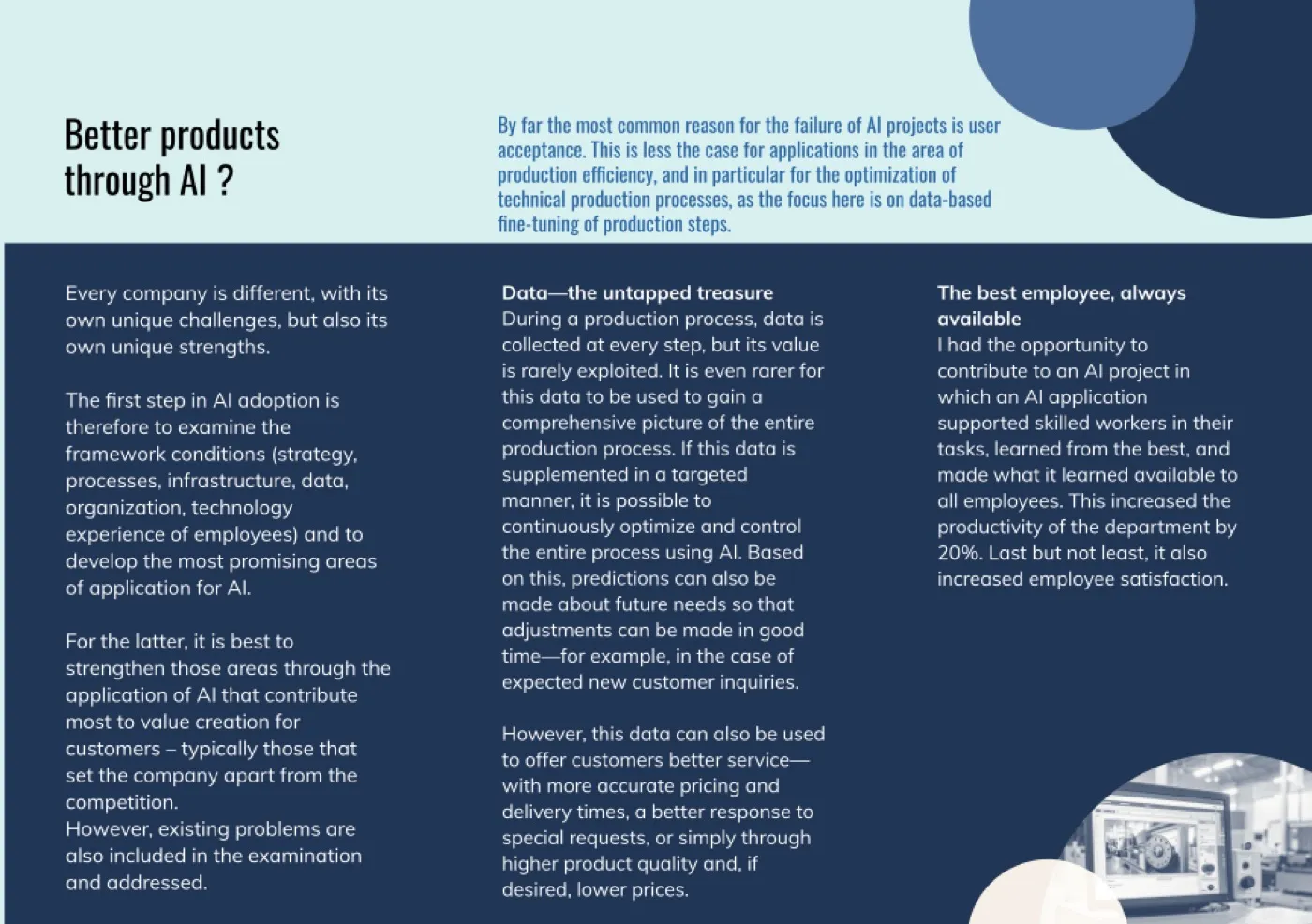
The full guide is available free of charge as a PDF.
Frequently asked questions
How much productivity does AI bring in manufacturing?
Studies estimate 15 % with selective use (McKinsey, 2023) up to 40 % with comprehensive use (WEF, 2025). The actual effect depends on starting point, data quality and adoption.
Do we need new machines to start with AI?
No. The biggest lever usually lies in the data your existing equipment and systems already produce, and in AI for support functions such as quoting, service or knowledge search.
Why do AI projects in production fail?
Most often because of user adoption. Specialists, planners and operators should be involved from the very first phase.
This guide belongs to Step 1: Vision and strategy. Why AI, and what role does it play for us?

AI Guide for Leaders
Where AI really creates value, where to start, and which structures to build from the outset.

AI Guide for Fiduciaries
Only one in three fiduciary firms invests in digitalisation, nine in ten expect it. Three proven ways to start.